

Print
Bookmark and Share

Signalling and media gateways

GroomerII media gateways for IP and TDM protocol conversion

GroomerII is a reliable, compliance tested signalling and media gateway for any telco or service provider function where there is a need for IP and TDM voice network interconnectivity. It enables the delivery of today's revenue generating, IP-based services into SS7 or legacy CAS and PRI networks. In addition, it can be used as a powerful protocol converter between multiple TDM protocols including BT DASS2, DPNSS and international Q.SIG. In short, GroomerII is a powerful and adaptable problem solver.

 

Problem solved

GroomerII is installed in many locations worldwide to solve a variety of problems. It is typically deployed as a signalling and media gateway between public or private networks and contact centre switches, IP call/communications managers or PBXs with incompatible TDM or IP interfaces. It has also been used, for example, by numerous telecommunications equipment manufacturers (TEMs) as a protocol converter to interface their equipment to public networks. Similarly, network providers have installed GroomerII as a means of connecting their enterprise customers' PBXs, running a variety of disparate protocols, to their networks.


Further examples

Additionally, equipment resellers and systems integrators install GroomerII in order to connect IP-PBX equipment, such as Siemens' HiPath 8000 or the Avaya Communication Manager, to ISDN or SS7 networks. These approaches are particularly suitable for many scenarios, such as in large call centres, for mobile telcos' network scale IVR platforms, or for where the telco offers only SS7 connection. And, because GroomerII is an adaptable, integrated appliance, it can be readily customised for a variety of such application requirements.


Configurations

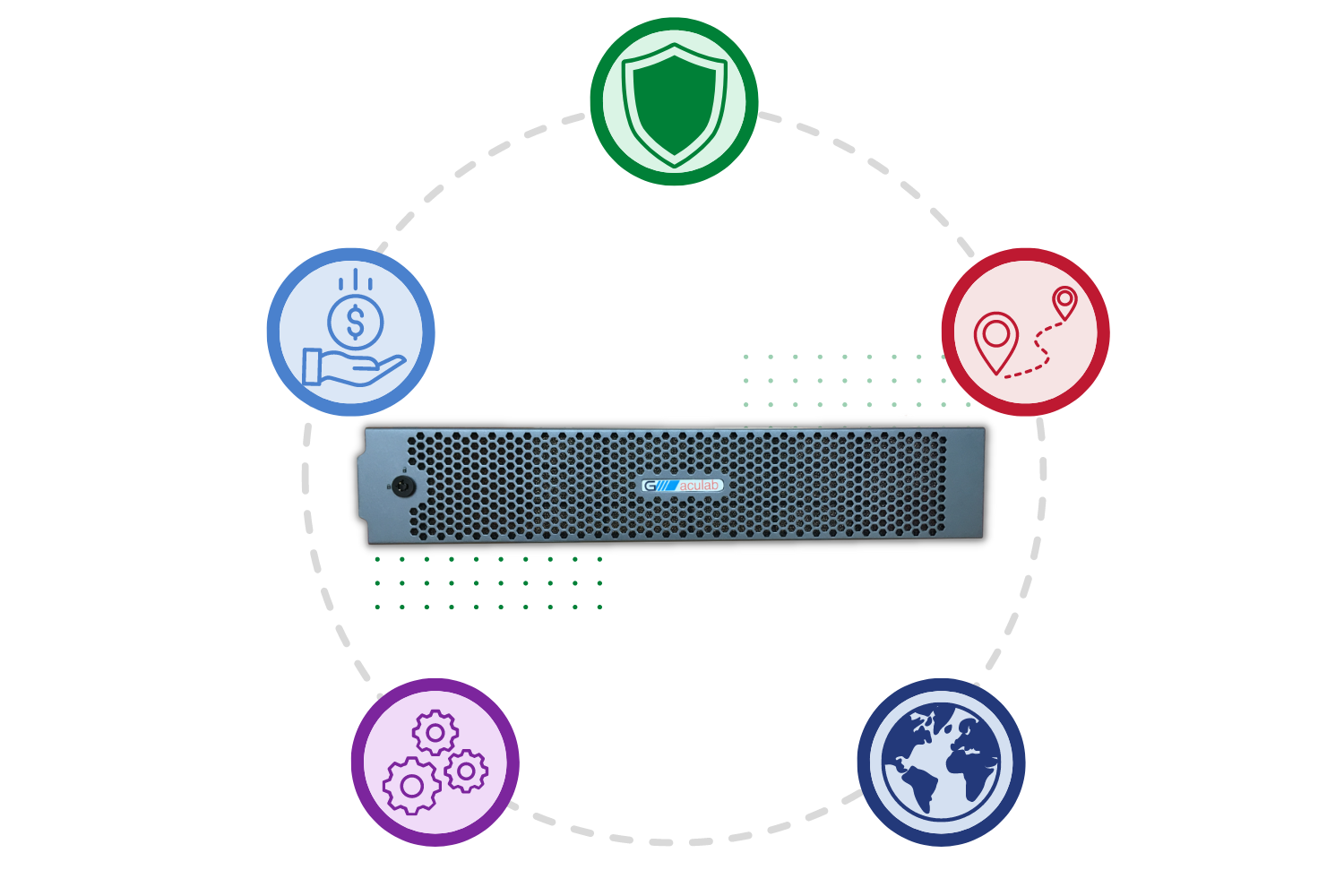
GroomerII's rackmount, 1U, 2U and 6U scalable configurations offer essential redundancy, with transcoding, protocol conversion, ODBC database connectivity, SIP call balancing, and a host of call routing features for all supported protocols - whether CAS, DASS2, DPNSS, H.323, INS1500 (JATE), ISDN PRI, Q.SIG, SIP or SS7. GroomerII offers support, on a per call basis, for a variety of audio codecs, including G.711, G.723.1A, G.726, and G.729AB.


More information available

For more details on Aculab's GroomerII, see the datasheet.

If you wish to discuss your product requirements or a purchase, please talk to your Account Manager or email sales@aculab.com

As an adaptable, integrated appliance, GroomerII offers a wide variety of global users - equipment manufacturers, resellers, systems integrators, service providers and carriers - the ideal solution to many protocol conversion or signalling and media gateway problems. It is a reliable, compliance tested platform that can be used to add new voice services or extend existing infrastructure in support of a migration strategy to an all IP architecture.

Signalling and media gateway

GroomerII combines the functions of a signalling and media gateway for interconnection between TDM (CAS, ISDN or SS7) networks and IP (H.323 or SIP) networks, including interoperation with SIP Proxy servers and H.323 gatekeepers. GroomerII is particularly suitable for SS7-to-SIP interconnection and can be used additionally for H.323-to-SIP or SIP-to-SIP transcoding applications.

Protocol converter

GroomerII also operates as a traditional protocol converter, uniquely offering multiple, simultaneous conversions between any mix of supported TDM protocols. GroomerII supports A-law and µ-law encoding conversions and a wide range of CAS and ISDN protocols, including BT DASS2, international Q.SIG and DPNSS, making it suitable for deployment in many worldwide markets.

Call manager

As a call manager, GroomerII offers many call routing options. Routing can be based on a number of parameters such as call type, CLI (ANI) or DDI (DNIS). Essential operations include the configuration of numbering plans, number translation, and multi-port concentration. Routing between TDM and IP is based on local DDI (DNIS) to IP address translation.

ODBC database connectivity

An ODBC interface allows GroomerII to interrogate an external, user maintained database for call routing parameters. This readily enables number portability and the implementation of black/white lists based on CLI (ANI), DDI (DNIS) or IP address. Customers benefit from being able to use an existing database rather than managing duplicate entries on multiple GroomerIIs.

Dual redundant SS7 signalling

For telco interconnection of SS7 networks, signalling redundancy is often a mandatory requirement. GroomerII fulfils this need with a dual redundant MTP3, either in single chassis or dual chassis mode. In a dual chassis configuration using 'A' or 'F' links, several GroomerIIs can be arranged to operate behind a single network point code. In this way, two GroomerII units provide the signalling connection with, as a minimum, a pair of signalling links, and each GroomerII (two or more) independently handles its media conversions between SS7 and IP.
SIP call balancing

SIP call balancing

In a typical scenario, GroomerII can be used to front-end an IP platform such as a network-based IVR for a mobile telco. For reasons of capacity and redundancy, the IVR platform is often comprised of multiple servers, reached via a single number. SIP balancing means that calls can be distributed across these multiple end points on a round-robin basis. This ensures equitable load sharing between servers in addition to congestion handling. GroomerII uses the SIP OPTIONS message to poll and maintain an active/busy status per IVR server.  

SIP fallback

When GroomerII is used to interconnect the PSTN to an IP-based application platform providing, for example, SIP-based E911 services, it is often the case that these platforms are paired for redundancy purposes. In a situation where one SIP platform becomes unavailable it is desirable to direct calls from GroomerII to the surviving platform. SIP fallback differs from SIP call balancing in that all calls are targeted at a primary endpoint and only to a secondary endpoint, or the next available alternative from a configured list, if the initial choice is unavailable. This functionality provides for automatic fallback and restore on a call-by-call basis.

SIP call recovery

GroomerII is often used in a next generation emergency services scenario, where it can be used to interconnect a central office or E911 tandem to an all-IP, SIP-based public safety answering point (PSAP). In this scenario, it is vital to ensure connection to a caller is maintained. Call recovery is used to identify when a previously connected SIP call has failed and to automatically establish a replacement call via an alternative SIP application server. The call attributes of the original call are reused for the recovery call together with a SIP custom header presented in the INVITE to the secondary SIP server. This enables that alternative server to identify both recovery and original calls, and to be able to route the recovery call to the appropriate PSAP agent.

IP voicemail routing

GroomerII offers unique interworking functionality for carriers or CLECs deploying IP-based equipment such as voicemail. It solves the problem of how to successfully route a call, forwarded from the PSTN, to the appropriate IP mailbox by translating the original dialled number to a diversion header within an outgoing SIP INVITE.

Wildcard routing

In the event that a service provider has several SIP applications, each running on separate hosts, there is a need to be able to route incoming DDI (DNIS) calls, originating in the PSTN, to a specific IP address. The need is for calls within a certain range of DDI numbers to be routed to the correct application.  This is achieved by configuring wildcard characters in GroomerII's internal routing tables so that the address map for each SIP end point translates a range of DDI numbers into the required IP address.

If you wish to discuss your gateway requirements or a purchase, please talk to your Account Manager or email sales@aculab.com

Least cost routing

The call routing capability of GroomerII is a feature that underlines its adaptability, enabling the resolution of many problem scenarios. This includes least cost routing with time of day scheduling, which means calls can be transparently re-routed to alternative TDM or IP destinations, dependent on the time of the day or week (peak/off peak) the call was placed.

Call data records

Call data records (CDRs) can be generated and written to file for all signalling types, including SIP, and contain tracing information on each through routed call. These records are generated in a number of formats, including a user configurable format, and are typically post processed by an external call logging or network management system for billing purposes.

High availability

Because downtime means loss of revenue, GroomerII offers several features to ensure high availability and resilience. Redundant, hot swap power supplies and hardware RAID Level 1 'disk mirroring' are provided as standard on all variants of GroomerII. An SNMP agent is included and traps can be configured to report all events affecting the normal operation of the system to a remote network management system. In addition, comprehensive system diagnostics, including the capture of signalling protocol trace are provided.

GroomerII is also fitted with a remote management module (RMM), which enables remote console (KVM) control of the system via a dedicated Ethernet port, for '24 X 7' system support. Using a standard Web browser on a client computer, the administrator is able to see the screen of the remote GroomerII and work with the GroomerII application as if (s)he was seated at the target system with full KVM control. This 'virtual presence' provides convenient and secure, '24 X 7' access to manage GroomerII and independently control power and reset.

Reconfiguration

Centralised control of reconfiguration and the downloading of new software and routing files is also possible such that GroomerII systems can be re-configured on-line to change the protocol parameters on any trunk with no loss of service to other trunks in use.

Call progress options

GroomerII usefully incorporates call progress options, which can be used to provide flexible conversion between international signalling types. As CAS protocols do not provide the same level of call progress information as ISDN signalling systems, GroomerII can be configured to generate tones to reflect the progress of the outgoing call. Tone generation can be customised for each routing path according to the call source and destination port.

Host independent approvals

Aculab has obtained many country specific, host independent regulatory approvals, such that GroomerII can be deployed throughout the world without additional approvals. In regions where this option is not available, Aculab has experience to offer in support of users seeking system level type approvals.

Software support agreement

A GroomerII support agreement is available, with an inclusive package offering training, technical support assistance, diagnostic support and the availability of new software updates and enhancements.

Whilst GroomerII uses later versions of Aculab telephony software, the various components are packaged into a single, version controlled software build, therefore, device drivers and other components may not be individually downloaded (using the AIT download utility) and installed in a GroomerII. For information on the latest software release versions and, if you have a GroomerII support agreement, the availability of updates and enhancements, please contact your Account Manager or email sales@aculab.com


If you wish to discuss your gateway requirements or a purchase, please talk to your Account Manager or email sales@aculab.com